What is kasō? How it differs from feng shui, and reading a floor plan
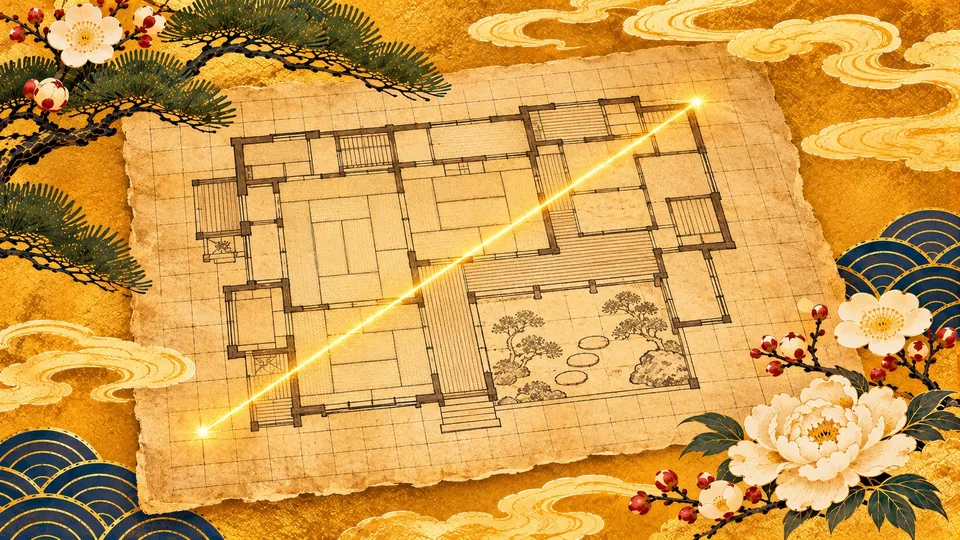
Kasō, “house physiognomy”, is a way of judging a home’s fortune from its floor plan and directions that developed in Japan. Growing out of Chinese feng shui and onmyōdō and adapted to Japan’s climate and way of life, it spread widely in the Edo period, when many books on kasō were published.
On this page
1.Kasō and feng shui
| Kasō | Feng shui | |
|---|---|---|
| Origin | Japan (rooted in Chinese thought) | China |
| Mainly looks at | The floor plan, directions and shape of the house | The whole site and its surroundings, the flow of qi |
| Hallmarks | Great weight on the demon gate and rear demon gate | Dragon veins, the flow of water, balance of the five elements |
The basics of feng shui are in What is feng shui?
2.The demon gates and the “two lines”
Among the things kasō values most are the center lines and the corner lines (schools differ on how wide the lines are and how they are treated).
- Center lines: the north–south and east–west lines through the center of the house
- Corner lines: the northeast–southwest and northwest–southeast lines through the center
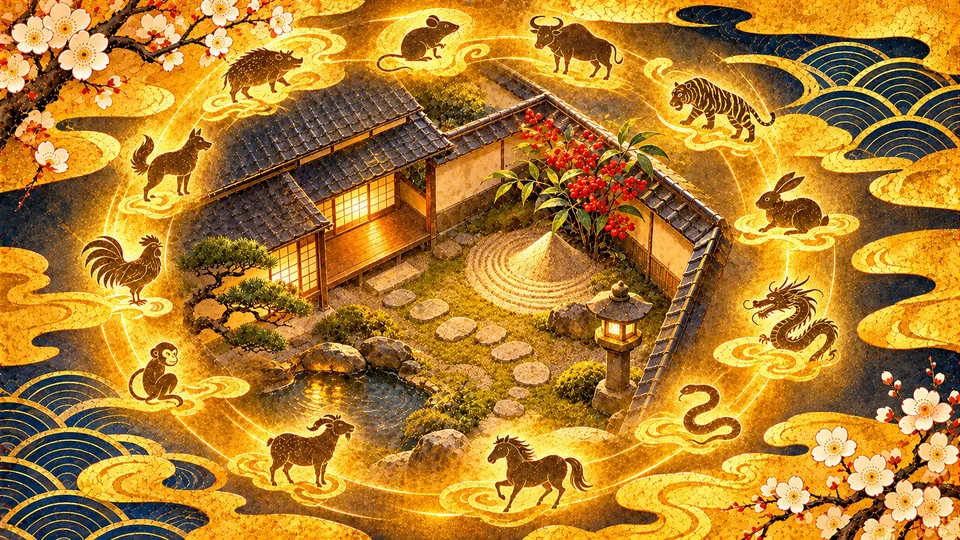
The line from northeast to southwest is the demon gate line. The northeast (Gon, Ox–Tiger) is the demon gate, kimon, and the southwest (Kon, Goat–Monkey) is the rear demon gate, ura-kimon. Many kasō books teach that the front door, water areas such as the toilet, bathroom and kitchen, and anything with fire are best kept off them. For the origins, see directions and the eto.
In old Japanese houses, the northeast was where the cold winter wind got in, and the southwest was where the summer afternoon sun spoiled food. Kasō’s teachings are said to contain a lot of this kind of practical wisdom.
3.Projections and missing corners
The shape of the house matters in kasō too.
- Projection (hari): a part that sticks out from one side of the house. It is said to strengthen the luck of that direction, and is mostly lucky.
- Missing corner (kake): a part where one side of the house is set back. It is said to weaken the luck of that direction, and is often unlucky.
One common view is that a part sticking out by up to a third of a side’s length is a projection, and a side set back by two thirds or more is a missing corner, but schools use different standards.
4.Examples by room
- Front door: east and southeast are often said to be good. Avoid the demon gate line.
- Kitchen: east and southeast, with their morning sun and where food keeps better, are often lucky.
- Toilet and bathroom: best kept off the demon gate and rear demon gate, and away from the center of the house.
- Bedroom: settled directions such as north, northwest and west are said to suit.
5.Living with kasō
A floor plan that meets every condition of kasō is hard to find in real life. Even if some part bothers you, paying attention to cleanliness, light and air makes a home much more comfortable. For the direction and timing of a move, see lucky-direction trips in Nine Star Ki, and for each year’s unlucky directions, Happō-fusagari.
6.FAQ
My home has a layout kasō calls unlucky. What should I do?
Kasō is a traditional guide for thinking about a home. An unlucky layout doesn’t mean something bad is bound to happen. Keep the spots that bother you clean, bright and airy, and put things in order where you can.
Is kasō only for building a new house?
It is often consulted when building, extending or choosing a home to move to, but it also helps when thinking about how to use the home you have, such as which room is for what and where to put storage.
Now try a reading for yourself
Free readings related to this article.
Read next