Counting the days for a baby’s first rites, and choosing a date
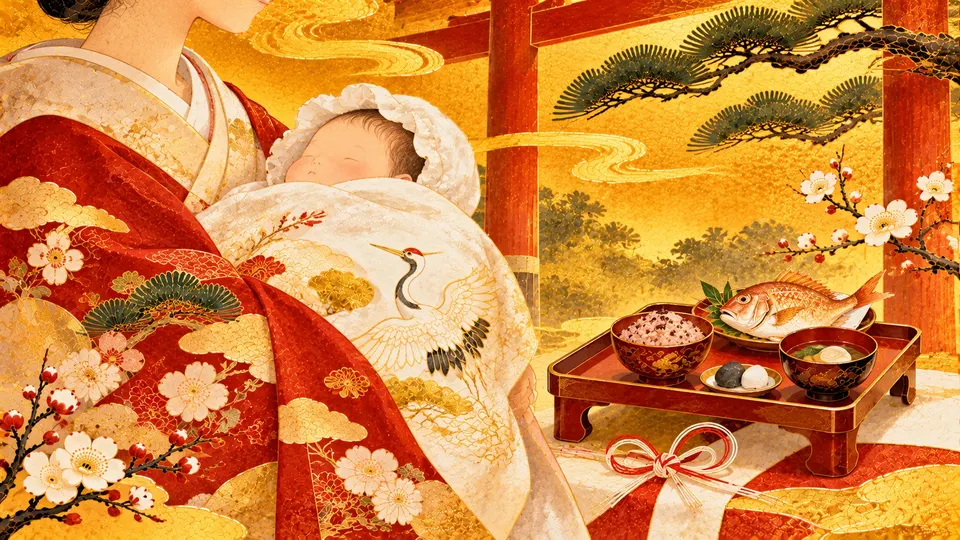
In a Japanese baby’s first year there is a run of celebrations: Oshichiya, Omiyamairi, Okuizome and the first sekku. The first three are set by counting days from the birth, with the day of birth as day 1. The first sekku is simply the first seasonal festival after the baby is born. Enter the birthday below and you will see all the dates and their rokuyō at once.
On this page
1.Find the dates from the birthday
Choose a date of birth and the dates will appear here.
2.The rites and how they are counted
Customs differ by region and by family; these are the usual guidelines.
- Oshichiya (“the seventh night”): on the evening of day 7, the family announces the baby’s name. This is when the hand-written naming sheet (meimeisho) goes up on the wall.
- Omiyamairi (shrine visit): the baby is presented to the local guardian deity. Many places say day 31 for a boy and day 32 for a girl, others simply “about 30 days”. Some families wait until the baby is two or three months old to avoid the worst of the cold or heat.
- Okuizome (“first meal”): the baby is given a pretend first meal of rice, fish and soup, with the wish that they never go hungry. The guide is day 100, though some areas use day 110 or 120.
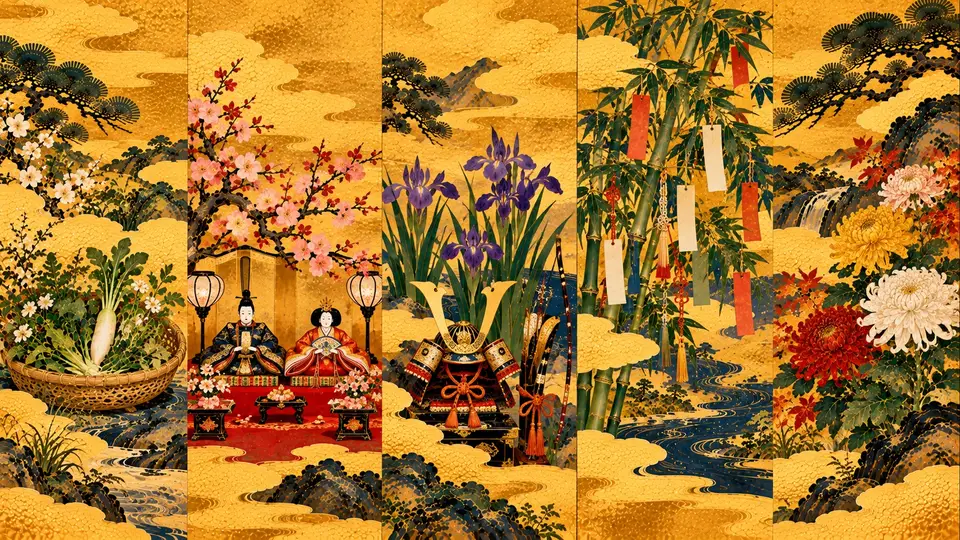
- Hatsuzekku (first sekku): the first seasonal festival, March 3 (the Doll Festival) for a girl and May 5 (Boys’ Day) for a boy. If the festival comes only a few weeks after the birth, many families leave it to the following year.
3.Choosing a day
Today most families decide by how mother and baby are doing and by which weekend the family can gather. You do not need to stick to the exact day; a convenient day nearby is fine.
If you would like to follow the calendar, a Taian day in the rokuyō, or a lucky day such as Ichiryū-manbai-bi or Tenshabi, gives extra peace of mind. Some people avoid Butsumetsu and Shakkō, but the rokuyō have nothing to do with shrine rites in origin, so many say there is no need to worry. Read more in the kinds of lucky days and what the rokuyō are.
4.Common ways to combine them
- Move Omiyamairi to around day 100 and do it on the same day as Okuizome, so there is only one photo session.
- Keep Oshichiya small, at home with the family, and just prepare the naming sheet.
- Make the first sekku a meal with the grandparents.
See the Shichi-go-san age chart for ages and dates, good days for a safe-birth prayer for the pregnancy belt ceremony, and the lucky day calendar for other lucky days.
Now try a reading for yourself
Free readings related to this article.
Read next