The way to advanced tarot: astrology, Kabbalah, the Thoth deck and your own interpretations
Behind tarot lies a whole system of symbols tied to astrology and the Kabbalah. Here is a map for going further, and ways to grow interpretations that are yours alone.
On this page
(Intermediate · about 5 minutes to read)
You now have all the basics you need to read tarot. In this last lesson, for anyone who wants to go deeper, we introduce the symbolic systems built up in the nineteenth and twentieth centuries. There is no need to memorise all of it. Just knowing that “this world exists” will help you see the meanings packed into the pictures on the cards.
1.Correspondences with astrology
The Golden Dawn assigned the 22 Major Arcana to the seven classical planets (the Sun, Moon, Mercury, Venus, Mars, Jupiter and Saturn), the twelve zodiac signs and three elements (air, water and fire). The Magician is Mercury, the High Priestess the Moon, the Empress Venus, the Emperor Aries, the Tower Mars and the World Saturn, for example. Today many readers also add Uranus, Neptune and Pluto, making the Fool Uranus, the Hanged Man Neptune and Judgement Pluto. If you know some astrology, you can understand a card’s character from the character of its planet or sign.
2.Cards linked to planets
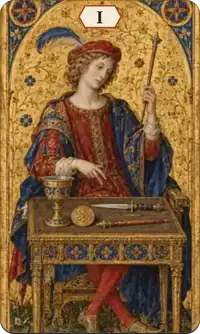
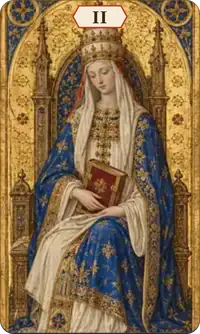
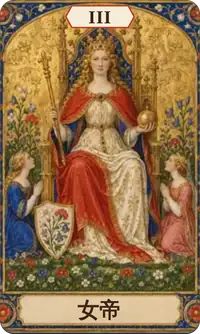
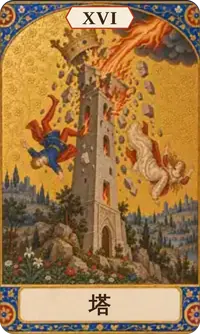
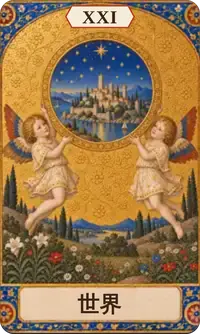
The Magician (Mercury), the High Priestess (Moon), the Empress (Venus), the Tower (Mars) and the World (Saturn). You can check these in the correspondences section of the card encyclopedia too.
3.The Minor Arcana and the zodiac
In the same system, the 36 numbered cards from Two to Ten are each given one of the 36 decans, the ten-degree slices of the twelve signs of the zodiac. The Two to Four of Wands, for example, belong to Aries, and the Two to Four of Cups to Cancer. Each card is also linked to a planet, which gives you clues to its finer shades of meaning. A decan is a fixed stretch of the Sun’s path through the year, so these cards can be read as calendar dates as well. The Two of Wands is roughly 21 to 30 March, and the Three of Cups roughly 2 to 11 July. The dates are the same everywhere in the world; in the southern hemisphere only the names of the seasons change. (Book T itself counted the decans from the star Regulus, but this site, like Crowley and most modern readers, uses the usual zodiac counted from the spring equinox, the tropical zodiac.) The Knights, Queens and Kings each rule from 20 degrees of one sign to 20 degrees of the next (about a month), so we add that period as a guide. The Aces and Pages rule a whole quarter of the year spanning three signs, so they have no decan dates. If you read them at all, it is only as a rough season: the Ace of Wands covers Cancer to Virgo, from late June to late September or so. In this site’s readings, these dates are only added as a secondary guide.
4.The Kabbalah and the Tree of Life
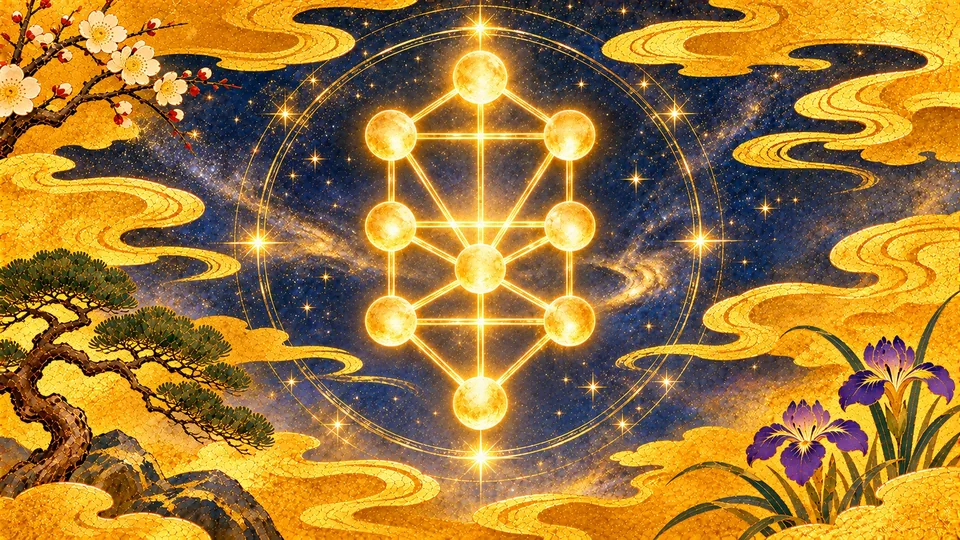
Ever since Éliphas Lévi (building on an idea of Court de Gébelin), the 22 Major Arcana have been linked to the 22 letters of the Hebrew alphabet. In the Golden Dawn’s system the Fool is Aleph, the Magician Beth and so on in order, with the World as Tav. In the Kabbalah’s diagram called the Tree of Life, the 22 cards are said to correspond to the 22 paths joining the ten spheres (sephiroth), while the Ace to Ten of the Minor Arcana correspond to the ten sephiroth themselves. It is fascinating how the meanings of the numbers on the pip cards overlap with each stage of the Tree of Life.
5.The Thoth tarot
The Thoth deck was conceived by Aleister Crowley and painted by the artist Frieda Harris between 1938 and 1943; it was published in 1969, after Crowley’s death. Astrological and Kabbalistic symbols are worked into every corner of the pictures, and it is still loved by many students of tarot. Its names are distinctive: Strength becomes “Lust”, Justice “Adjustment”, Temperance “Art”, Judgement “The Aeon” and the World “The Universe”. Its court cards have four ranks, Knight, Queen, Prince and Princess, and the pip cards carry short titles such as “Love” and “Peace”. Once you have a firm grounding in the Waite deck, looking at the Thoth deck lets you meet another face of the same cards.
6.Cards renamed in the Thoth deck
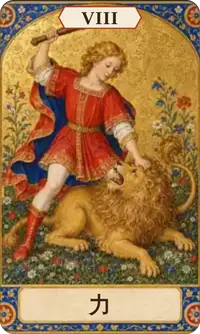
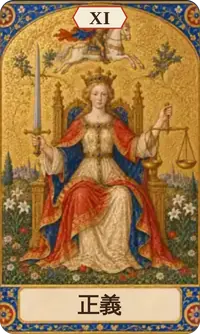
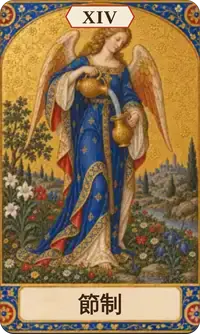
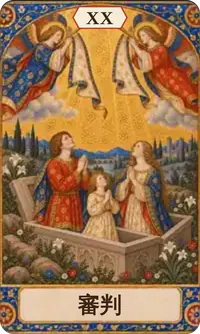
Strength, Justice, Temperance, Judgement and the World in the Waite deck. In the Thoth deck they are called Lust, Adjustment, Art, The Aeon and The Universe.
7.Growing your own interpretations
Just as important as learning the systems is growing interpretations out of your own experience. Rachel Pollack repeatedly stressed the value of looking closely at a card’s picture and letting a story unfold freely from it. Even the same card slowly changes its meaning for you depending on when and where you meet it.
8.Ways to grow your interpretations
- A card diary: keep a record of your one-card draws, and add to each card’s “what it means for me”.
- Dialogue: become a figure on the card, ask “What are you doing?”, then imagine the answer and write it down.
- Comparison: look at the same card in different decks and look for what they share and how they differ.
- Learning together: listen to how other people read, and take in points of view you don’t have.
9.On to the next journey
What you have learned in this course is a map for reading tarot. A map keeps you from getting lost, but the one who takes in the scenery is you. Draw a card, look at the picture, and put what you feel into words. Doing that again and again is the surest way to improve. Use Yorozu Goyomi’s tarot card encyclopedia and one-card draw as a lamp for your journey.
10.An example of a personal interpretation taking root
Say someone who has kept a one-card diary for about six months notices that “on days when the Seven of Cups comes up, I’ve packed my schedule so full that I can’t choose anything.” It connects with the encyclopedia’s meaning, “too many choices, daydreaming”, but a more concrete reading has grown out of that person’s own life. This is what “growing your interpretations” means. A common mistake is believing you can’t become an advanced reader without memorising every astrological and Kabbalistic correspondence. The systems are just one kind of map. Your own words born from your records and the systems are both valuable tools.
11.Practice
In the card encyclopedia, look for the Major Arcana card that corresponds to your birth sign or your favourite planet. Find where the qualities of that sign or planet show up in the card’s picture, and write them down.
12.Quick quiz
Q1. In the Golden Dawn’s system, which planet corresponds to the Magician?
- Mercury
- Mars
- Saturn
Answer: Mercury. The Magician corresponds to Mercury, the planet of intellect and communication.
Q2. What is Temperance called in the Thoth deck?
- Art
- The Universe
- Lust
Answer: Art. In the Thoth deck Temperance is called “Art”. Lust is Strength and The Universe is the World.
Q3. Which of these is not one of the ways to grow your own interpretations introduced in this lesson?
- Using no meanings except the set ones
- Keeping a card diary
- Holding a dialogue with a figure on the card
Answer: Using no meanings except the set ones. Alongside learning the systems, the lesson recommends growing interpretations from your own experience through a diary, dialogue, comparison and so on.
13.Draw a card
Yorozu Goyomi’s tarot reading lets you do a one-card draw, a three-card spread, an either-or reading and the Celtic Cross. Look up the meanings of all 78 cards in the tarot card encyclopedia.
Now try a reading for yourself
Free readings related to this article.
Read next